
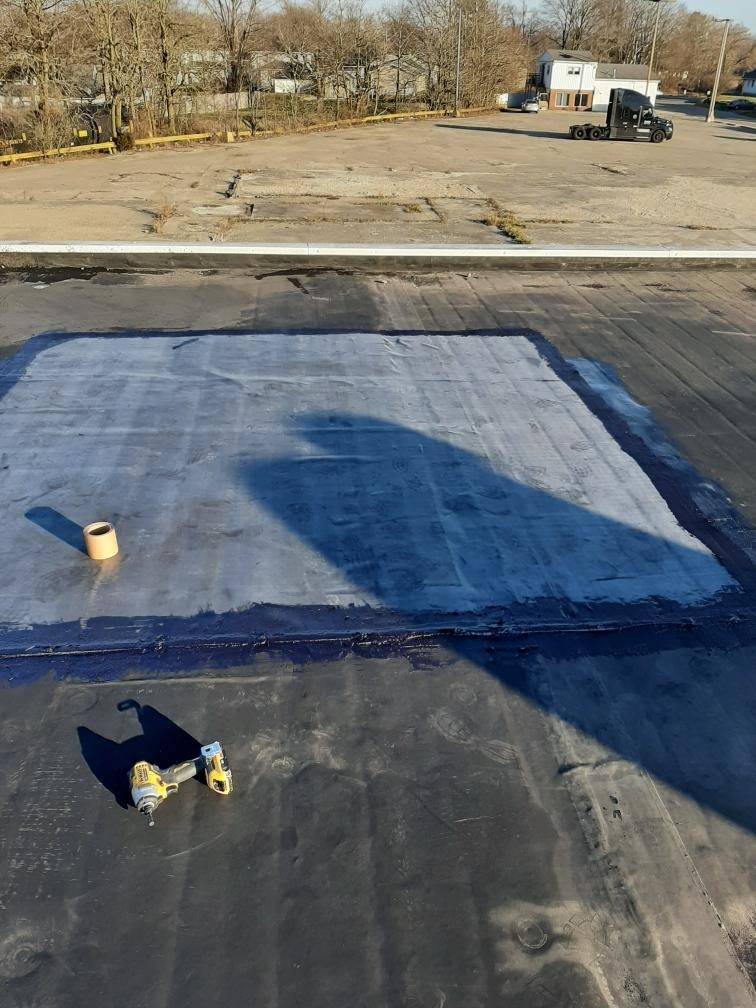
Flat roofs in New Castle, Indiana
The porch roof, the back addition, the garage: the low-slope roofs. We repair and replace rubber and membrane roofs.
How a flat roof fails
A flat roof has no slope to forgive a fault. Water sits on it and finds whatever is open.
A seam you can lift with a finger
A rubber roof is sheets glued together. The glue at the seams gives up years before the rubber does, and an open seam lets water run between the sheet and the roof board.
Puddles still there two days after rain
Standing water finds every weak seam and adds weight the framing was not built for. It usually means the roof has sagged or the drain end has settled.
A leak along the wall of the house
The membrane should turn up the wall and tuck behind the siding. On many additions it stops at the wall with a bead of caulk, and the caulk lasts about five years.
Rubber pulled tight at the corners and edges
Rubber shrinks as it ages. It pulls away from the edges, lifts off the corners and tears at the fasteners. A roof doing this is near the end.
Blisters or a spongy feel underfoot
A blister is air or moisture trapped under the membrane. Spongy means the insulation board below is wet, and wet board does not dry out under a sealed roof.
Rolled asphalt roofing with bare, cracked patches
The gritty roll roofing on many old porches is the cheapest flat roof and lasts 8 to 12 years. Once it cracks, repairs do not hold for long.
How a flat roof job goes
We start by finding out whether the roof is wet underneath, because that decides everything else.
Shawn walks the roof.
He checks every seam, the edges, the wall and the drains, and presses for soft spots. Where he suspects wet board he cuts a test square and seals it again.
You get a straight answer and a written price.
Repair it, or replace it, with photos of why. If a repair will only buy two years, he says so and lets you choose.
Old roof off, deck made good.
For a new roof, the old membrane and any wet board come off. Rotted roof boards are replaced and the slope is corrected if water was ponding.
New membrane.
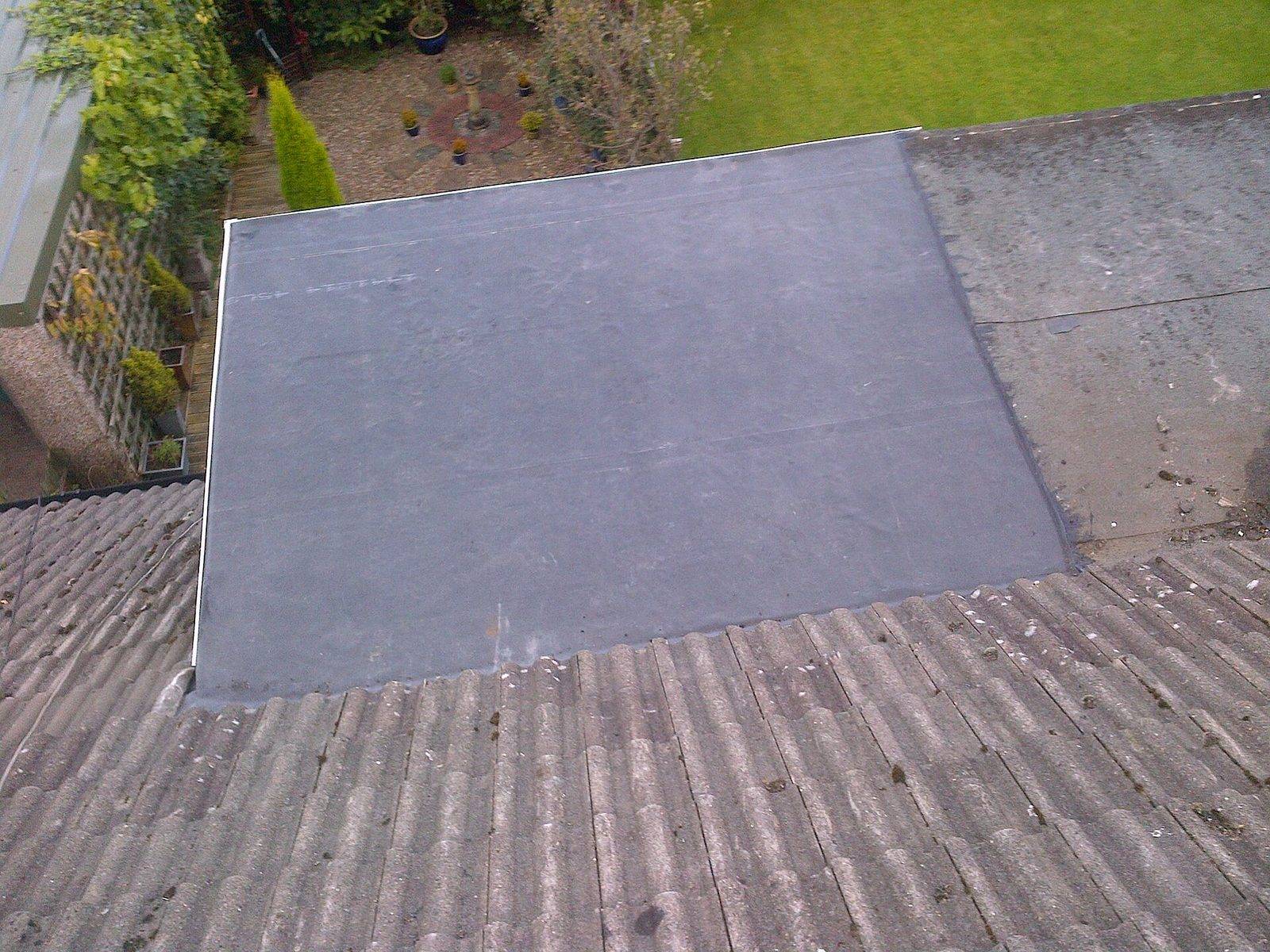
On a porch or an addition we lay the rubber in one piece wherever the size allows, so there are no seams in the middle of the roof at all. Larger roofs get seams lapped and taped, then rolled.
Edges, walls and drains.
The membrane goes up the wall behind the siding, metal edge is fitted all round, and the drain or gutter end is finished so water has somewhere to go.
What the day is like
A porch or addition roof is usually a one-day job, and it needs a dry day above about 40 degrees. The adhesives will not bond on a damp or cold deck, so we watch the forecast and may move the date.
It is quieter than a shingle job. There is some scraping when the old roof comes off, then mostly rolling and brushing. The glue has a strong solvent smell for a few hours, so keep the windows on that side of the house shut.
If the roof is under an upstairs window or holds an air conditioner, tell us beforehand. We lift the unit, roof under it and set it back on pads so its feet do not wear through the new rubber.
Afterward, the upkeep is simple: clear leaves off it each fall and keep the drain end open. More flat roofs are ruined by a blocked outlet than by age.
The warranty
All work is backed up by our workmanship warranty.
Who does the work
Shawn or Tabor’s own crew. Flat roofing is detail work at the seams and edges, and we do not hand it to a subcontractor. The same crew does the larger flat roofs on local business buildings.
Questions about flat roofs
How long does a rubber roof last?
About 20 to 25 years in Indiana if the seams and edges were done right and the drains are kept clear.
The rubber itself outlasts the glue. Many 15-year-old rubber roofs we see need their seams redone and nothing more.
Can you just coat it?
A coating can add years to a roof that is dry and sound underneath. We clean the roof, repair the seams, then roll on the coating.
A coating over wet insulation or open seams seals the water in. If the roof is wet below, coating it is money wasted, and we will tell you.
Why does my flat roof leak when the membrane looks fine?
Look at the edges. Most flat roof leaks come in where the roof meets the house wall, at a corner, or around a vent or post.
Water also travels under a membrane, so the drip inside may be several feet from where it got in.
Related work
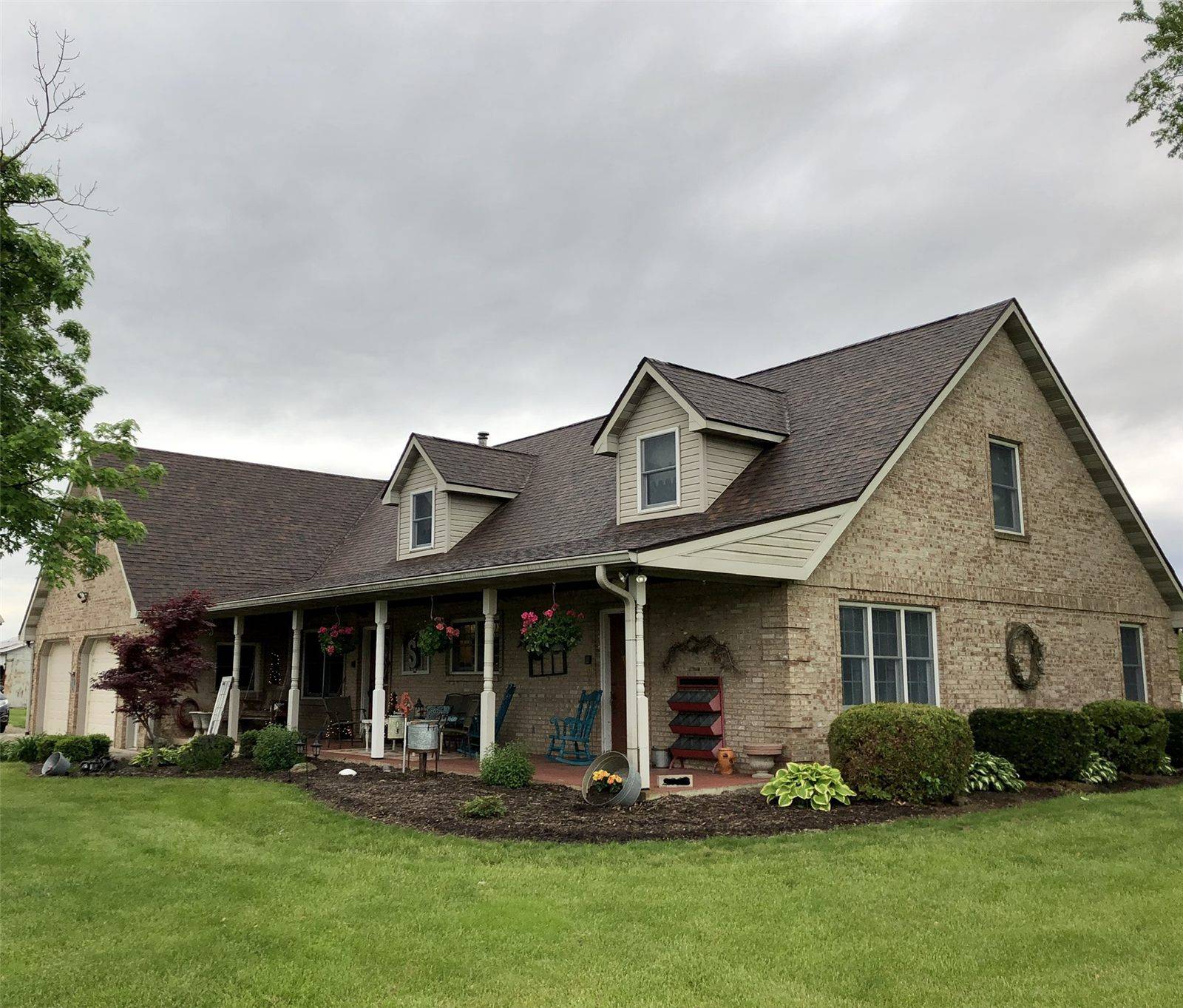
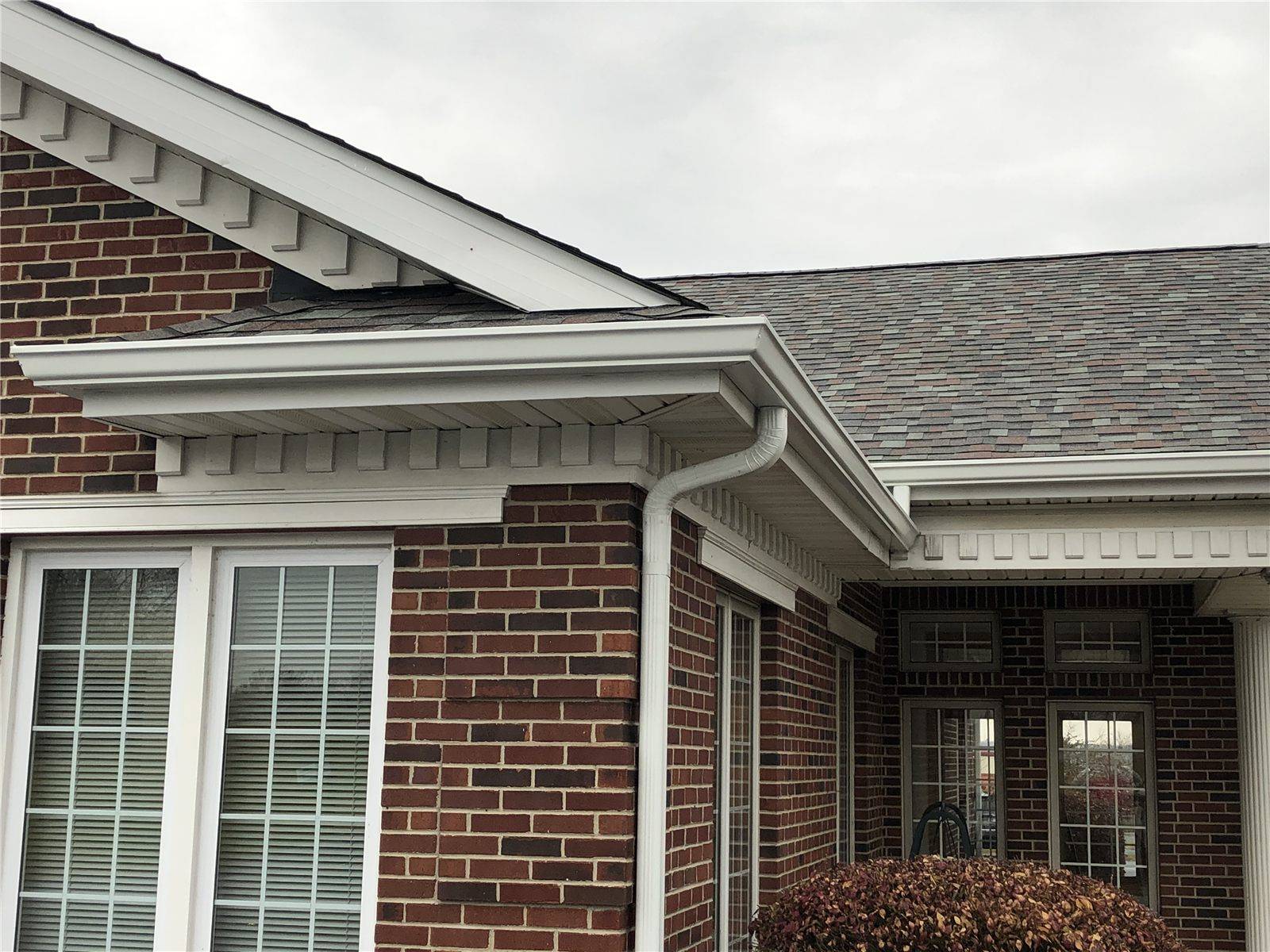
We repair and replace flat roofs in New Castle, Muncie, Anderson, Indianapolis, Carmel and Fishers. See where we work, or everything under Roofing & Exteriors.
Get your free estimate
Shawn calls you back the same day. The estimate is free. Prefer to talk? Call or text (765) 465-1208.
Don't Labor. Call Tabor!